
-

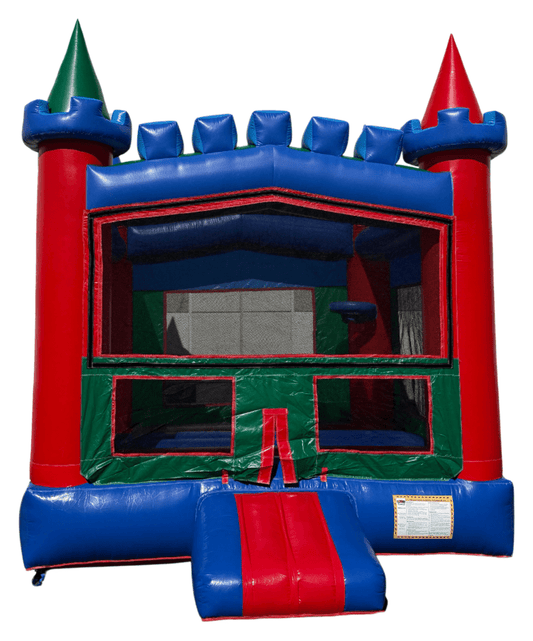 Sold outBounce house
13x13 Colorful Bounce House Castle
Free shipping, liftgate includedRegular price $1,295Regular price$1,495Sale price $1,295Sold out -
Bounce house
13x13 Princess Bounce House Castle
Free shipping, liftgate includedRegular price $1,295Regular price$1,495Sale price $1,295Sale -
Bounce house
13x13 Classic Bounce House Castle
Free shipping, liftgate includedRegular price $1,295Regular price$1,495Sale price $1,295Sale -
Bounce house
13x13 Tropical Bounce House
Free shipping, liftgate includedRegular price $1,295Regular price$1,495Sale price $1,295Sale


Inflate-O's commercial bounce house castles are the workhorses of any rental fleet, and a backyard favorite that lasts for years, not days. Shop 13×13 commercial bounce houses for sale with a 14ft peak, in princess, tropical, classic primary, and bold rainbow themes that book weekend after weekend.
Each unit uses 14oz commercial-grade PVC at the bounce floor and stress seams, is ASTM F2374 certified, and ships with a blower, stakes, and repair kit, backed by our 1-year warranty and free nationwide shipping.
What "commercial PVC" actually means
The difference between a unit that survives a rental season and one that splits in a month is the vinyl. A commercial PVC bounce house uses heavy 14oz reinforced PVC in the high-stress zones (the bounce floor, jump seams, and anchor points), where residential units use thin vinyl that fatigues fast. Every Inflate-O castle puts 14oz commercial PVC where the load lands, so it holds up to back-to-back weekend bookings, not just one backyard birthday.
13×13 castle quick specs
- Bounce area: 13 by 13 feet, 14 feet at the peak, plus the entrance ramp.
- Material: 14oz commercial PVC in the high-stress zones
- Safety: ASTM F2374 certified · CPSIA lead and phthalate safe
- Included: blower, ground stakes, carry bag, repair kit · 1-year warranty · free US shipping
Buying a commercial bounce house
Every commercial bounce house for sale here is a 13x13 castle with a 14ft peak, built from 14oz PVC in the high-stress zones, ASTM F2374 certified and shipped free anywhere in the continental United States. They ship from our Rancho Cucamonga, California warehouse, so Los Angeles and Inland Empire buyers usually see them in a couple of days and the rest of the country inside a week. Below: cost, lifespan, sizing, theme selection and the rental math.
How much does a commercial bounce house cost?
A commercial-grade bounce house costs $1,295 new. Every 13x13 castle on this page is that price in every theme, and each ships with a blower, ground stakes, repair kit and carry bag, backed by a 1-year warranty and free nationwide shipping.
Consumer bounce houses at big-box stores run $200 to $500. The difference is not branding, it is vinyl weight and stitch construction, and it decides whether the unit survives one backyard birthday or six rental seasons. If the unit has to earn money, the commercial price is the entry fee.
Is a bounce house rental business profitable?
Yes, and the payback period is short. A commercial castle rents for roughly $175 to $250 a day in most markets. Booked two weekends a month through a season, a single unit pays for itself and then keeps earning on equipment that is already sitting in the garage.
That is why nearly every operator we ship to started with a castle. It is the cheapest unit to buy, the easiest to transport, the fastest to set up, and the one customers ask for by name when they do not know what else to ask for. A 13x13 fits in a normal vehicle and one person can put it up in about ten minutes. Operators expanding a fleet add castles for volume and wet/dry combos for premium bookings, in that order. Buying two or more castles? Contact us for a fleet quote before you order.
How long do commercial bounce houses last?
A commercial bounce house that is anchored properly and stored dry typically lasts five to ten years in rental service and longer in backyard use. Storage and anchoring cause nearly every early failure, not the material itself.
The unit must be completely dry before it is rolled and bagged. Storing a damp castle is the number one cause of mildew and seam failure in this industry, and no warranty in the category covers it, ours included. Keep the bagged unit off bare concrete and out of direct sun, and patch small punctures with the included repair kit as soon as you find them rather than at the end of the season.
What size bounce house do I need?
A 13x13 castle is the standard size for both rental and backyard use. 13x13 is the bounce area: each castle has a 13 by 13 foot bounce area, 14 feet at the peak, plus the entrance ramp. Allow room for the ramp and five feet of clearance on every side.
That size exists because it is the point where the unit is big enough for a real party and still small enough for one person to transport and set up alone. Larger units mean a bigger vehicle, a second person and a yard most customers do not have. If you need more capacity for older kids or a bigger event, the right move is usually a second unit or a water slide, not a larger castle.
Which bounce house theme should I buy to rent?
If you are buying one unit to rent, buy princess. It is the single highest-booking theme in the country and it is not close, because girls' birthday parties are the backbone of this business and a princess castle gets requested by name.
Princess books highest. Tropical is the most flexible: it reads neutral and covers graduations, church events, company picnics and school field days where a princess castle would be the wrong call. Classic primary and bold rainbow are the fleet fillers that photograph well, never look dated, and book for the many events where nobody specified a theme at all.
The operators who do best carry a princess plus one neutral. That pair covers the widest range of requests with the least inventory. If the unit is for your own backyard, ignore all of this and buy the theme your kid points at.
Is it cheaper to buy a bounce house than rent one?
After about four parties, yes. Renting a castle runs $175 to $250 per event, so four rentals roughly equals the cost of owning one outright. Every birthday, summer afternoon and cousin visit after that is free.
The reason to buy commercial rather than the big-box consumer version is that a consumer unit is built for occasional light use and fails on exactly the schedule 8oz vinyl predicts. A 14oz commercial castle used by one family will outlast the childhood it was bought for. That is the difference between a purchase and a replacement cycle.
What do I need before the unit arrives?
Space: the 13 by 13 foot bounce area plus the entrance ramp, and five feet of clearance on every side, with overhead clear of branches, wires and eaves. The peak runs about 14 feet.
Surface: grass is best because you can stake it. On concrete or asphalt, anchor with sandbags instead. Never run a unit unanchored, and never run one in winds above roughly 15 to 20 mph. That rule is what keeps operators insured and kids safe.
Power: a standard 110V household outlet within about 50 feet, or a generator rated above the blower's draw. The blower runs continuously the entire time the unit is inflated; that is normal and it is how these work.
Buying more than one
If you are starting a route or adding to an existing fleet, contact us for a fleet quote before you order. We price multi-unit and wholesale orders for operators directly, and we can tell you which themes are booking hardest in your state based on what operators there are reordering.